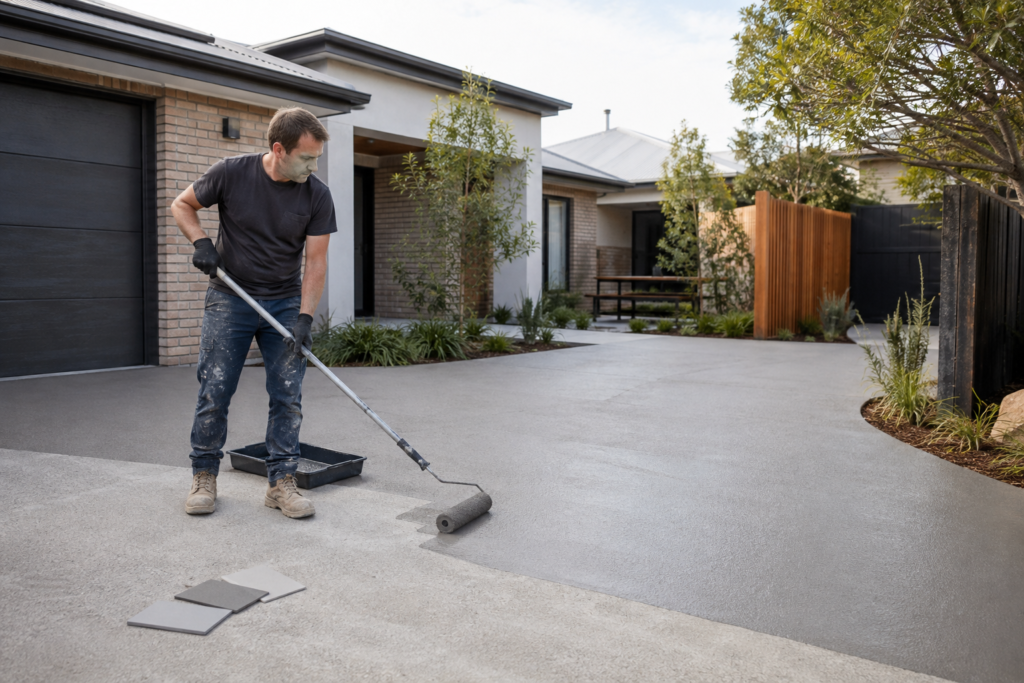
Australian homeowners and commercial property managers are giving greater attention to the appearance and performance of exterior surfaces as renovation activity shifts towards practical upgrades. Demand for concrete paint colours is expanding beyond traditional grey tones, with contemporary neutral shades, darker architectural finishes and lighter reflective options becoming more visible across driveways, courtyards and pedestrian areas.
Protection remains a central consideration when updating these surfaces, particularly in locations exposed to regular traffic, moisture or harsh sunlight. A correctly selected concrete sealer can help limit staining and water penetration while supporting easier maintenance, provided the underlying area has been prepared appropriately.
The trend reflects a broader change in how exterior areas are treated within residential and commercial design. Driveways, pathways and entertaining zones are increasingly considered part of a property’s overall presentation rather than purely functional areas requiring minimal attention.
Neutral Shades Lead Residential Demand
Neutral finishes continue to dominate residential projects because they can complement a wide range of brickwork, cladding and landscaping styles. Charcoal, warm grey, sandstone and muted brown tones are frequently selected for established homes as well as contemporary developments.
Darker surfaces can create a defined architectural appearance, particularly when paired with light façades or minimalist gardens. However, they may also absorb more heat under direct sunlight, making local climate and intended use important factors during selection.
Lighter shades can help create a more open appearance in compact courtyards and narrow side areas. They may also show dirt, tyre marks or organic staining more readily, requiring property owners to balance appearance with expected maintenance.
Test areas are becoming more common before larger projects proceed. Small samples allow customers to assess how a shade responds to daylight, shadows, surrounding materials and changing weather conditions rather than relying entirely on digital images or printed charts.
Preparation Determines the Final Result
Product performance depends heavily on surface condition. Existing concrete may contain oil, grease, dust, old coatings, curing compounds or biological growth that can interfere with adhesion.
Professional preparation may involve pressure cleaning, degreasing, mechanical grinding or acid treatment, depending on the surface and selected system. Cracks and damaged sections generally require assessment before decorative work begins, as a new finish will not correct underlying movement or structural deterioration.
Moisture is another important factor. Applying a treatment before the surface has dried adequately can contribute to discolouration, bubbling or adhesion problems. Contractors must also consider temperature, humidity and the likelihood of rain when scheduling exterior projects.
Previously coated areas can require additional testing. If an existing layer is unstable or incompatible with the proposed product, removal may be necessary before further work proceeds. This stage can add time and cost but may reduce the risk of premature failure.
Heat and Reflectivity Influence Selection
Australia’s climate is encouraging greater interest in how hard surfaces contribute to local temperatures. Large areas of dark paving can retain heat and remain warm after direct sunlight has passed.
This issue is connected to the urban heat island effect, which describes how developed locations can become warmer than surrounding areas because buildings and paved surfaces absorb and re-emit heat. The concept is increasingly relevant to councils, developers and households planning outdoor upgrades.
Reflective performance varies between products and shades. A light appearance does not automatically confirm a specific thermal result, so technical specifications should be reviewed where heat reduction is a project priority.
Shade structures, vegetation and landscape design can also influence outdoor comfort. Surface treatments should therefore be considered alongside planting, drainage and building orientation rather than presented as a complete response to heat exposure.
Commercial Projects Prioritise Safety
Commercial and shared environments introduce additional performance requirements. Car parks, ramps, workshops and pedestrian zones may need finishes capable of handling heavier traffic, chemical exposure or frequent cleaning.
Slip resistance is particularly important around entrances, pool surrounds and areas exposed to water. Texture additives can improve grip, although overly rough finishes may collect dirt and become more difficult to maintain.
Colour can support wayfinding and operational safety when different areas require clear visual separation. Contrasting finishes may identify pedestrian routes, loading areas, access zones or restricted sections without relying solely on signs.
Project managers must also account for curing periods and site access. Closing a driveway or commercial area for the required time can protect the finished surface from early damage and support proper product performance.
Maintenance Expectations Become Clearer
No exterior treatment is entirely maintenance-free. Regular sweeping, prompt removal of spills and appropriate cleaning methods can help preserve appearance and reduce surface wear.
Aggressive chemicals or unsuitable pressure-cleaning techniques may damage some systems. Property owners should retain manufacturer instructions and confirm whether periodic recoating is required under the applicable warranty.
Exposure levels will influence maintenance frequency. A sheltered courtyard generally experiences different conditions from a busy driveway exposed to vehicles, rainfall, leaf litter and continuous sunlight.
As outdoor renovation becomes more design-focused, product compatibility and preparation will remain more important than short-term visual impact. Projects supported by realistic maintenance planning, suitable materials and qualified application are better positioned to retain their appearance under Australian conditions.